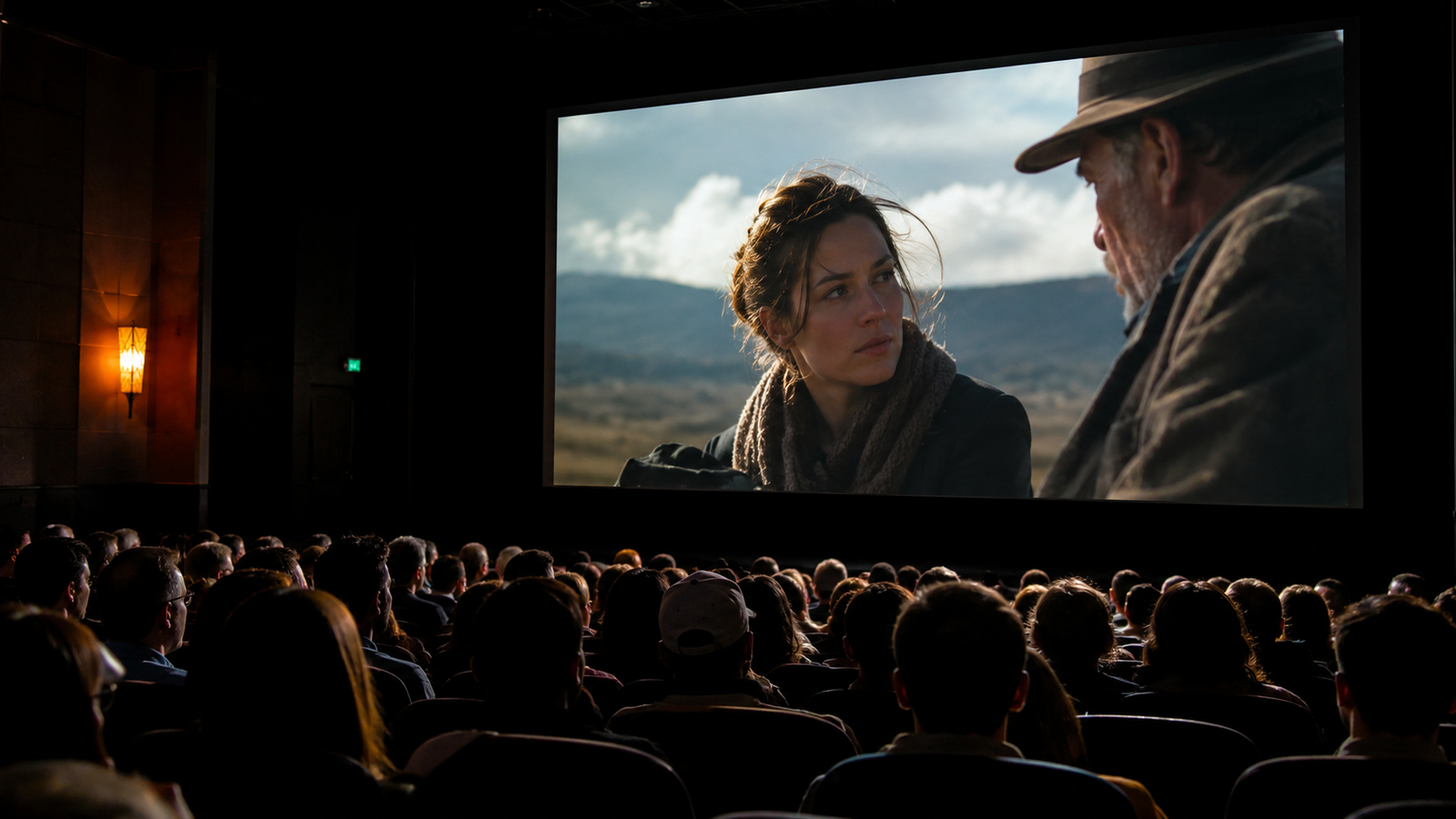
The Digital Cinema Package may have replaced the familiar reels of celluloid, but its purpose remains unchanged: bringing movies to audiences exactly as filmmakers intended. More than twenty years after the introduction of modern digital cinema standards, DCPs remain an essential part of theatrical exhibition, and their story is far from over.
For more than two decades, Digital Cinema Packages have transformed how movies reach theaters. Here’s how DCPs became the industry standard, why they remain essential, and what the future holds for theatrical exhibition.
For most of cinema’s history, getting a movie into a theater meant physically delivering reels of film. Those heavy 35mm prints had to be manufactured, shipped, handled, and eventually returned or destroyed. A single feature could arrive in several large containers, and every screening gradually contributed to wear and tear.
Today, most theatrical presentations operate very differently. Movies arrive as digital files, often transferred electronically or delivered on hard drives, and are played through specialized cinema servers and projectors.
At the center of this transformation is the Digital Cinema Package, commonly known as a DCP.
But where did DCPs come from, who established the standards, and how much longer will theaters continue using them?
What Is a DCP?
A Digital Cinema Package (DCP) is the standardized collection of digital files used to present movies in professional digital cinemas.
Think of a DCP as the digital equivalent of a traditional film print. Instead of reels containing thousands of feet of physical film, a DCP contains the movie’s picture, sound, and supporting information in a format designed for theatrical equipment.
Unlike an ordinary MP4 or MOV file, a DCP uses specialized image encoding, audio files, and technical instructions that tell cinema equipment how to assemble and play the presentation.
DCPs are designed to deliver consistent picture and sound quality across compatible theaters, whether the movie is a Hollywood blockbuster or an independently produced short film.
The Birth of Digital Cinema and DCI
During the late 1990s and early 2000s, digital projection technology began demonstrating that movies could be presented theatrically without traditional film prints.
However, there was a significant problem: different manufacturers were developing equipment and systems that didn’t necessarily work together.
The movie industry needed a common set of technical standards.
In March 2002, several major Hollywood studios established Digital Cinema Initiatives (DCI), an organization dedicated to developing specifications for digital theatrical exhibition.
Its founding participants included Disney, Fox, MGM, Paramount, Sony Pictures Entertainment, Universal, and Warner Bros.
The goal was straightforward: create a reliable digital cinema system that would maintain high presentation quality, protect copyrighted content, and allow movies to play on equipment from different manufacturers.
In July 2005, DCI published the first version of its Digital Cinema System Specification, establishing the foundation for modern digital theatrical distribution.
That specification helped transform digital projection from an emerging technology into a practical worldwide exhibition system.
How DCI Standards Changed Movie Theaters
DCI established technical requirements covering several important aspects of digital cinema.
These included image resolution, color reproduction, audio quality, playback compatibility, and security.
Digital cinema systems commonly support 2K and 4K picture resolutions. DCPs use JPEG 2000 image compression, which is designed to preserve high-quality theatrical imagery while keeping file sizes manageable.
Audio is typically delivered as uncompressed digital sound, supporting professional theatrical playback configurations.
Security was another major consideration. Commercial DCPs can be encrypted, allowing distributors to control which authorized theaters can play a movie and during what period.
This is accomplished through a Key Delivery Message (KDM), which functions somewhat like a digital authorization key.
Not every DCP requires encryption, however. Independent filmmakers and festivals frequently use unencrypted DCPs, particularly when managing screenings across multiple venues.
The most important achievement of DCI was establishing a common technical foundation that allowed the digital cinema industry to grow.
The Evolution From Interop to SMPTE DCPs
Early digital cinema installations used a format commonly known as Interop DCP.
Interop provided a practical method of distributing digital movies while the industry continued developing more comprehensive standards.
As digital cinema matured, the Society of Motion Picture and Television Engineers (SMPTE) established additional standards that expanded and refined DCP capabilities.
SMPTE DCPs introduced improved standardization and support for features such as more flexible frame rates, subtitles, and other presentation options.
Although Interop DCPs remain relevant for compatibility with certain older systems, SMPTE DCPs represent the more modern standardized approach.
For independent filmmakers, choosing between these formats can depend on the technical requirements of the theater or film festival receiving the movie.
How DCPs Changed Independent Filmmaking
Perhaps one of the most significant benefits of digital cinema has been the accessibility it provides independent filmmakers.
Historically, producing a professional 35mm theatrical print could be prohibitively expensive. Distribution also involved physical shipping, handling, and significant logistical challenges.
Digital cinema dramatically reduced many of those barriers.
Today, an independent filmmaker can create a theatrical-quality DCP from a properly prepared digital master and deliver it to festivals or cinemas without manufacturing a traditional film print.
This has made theatrical exhibition considerably more accessible to smaller productions.
However, a DCP still requires careful preparation. Incorrect frame rates, audio channel assignments, color conversion, or improperly formatted files can create playback problems.
A properly mastered and tested DCP helps ensure that audiences see and hear a film as its creators intended.
Are DCPs Still Required in Movie Theaters?
For most professional digital cinema exhibition, DCPs remain the standard delivery format.
While some independent venues, microcinemas, and special-event locations accept ordinary video files, major theatrical chains and many established film festivals continue to rely on DCPs.
That distinction matters.
A movie can look excellent as a ProRes master or high-bitrate MP4, but that doesn’t necessarily mean a professional cinema server can ingest and play it as a theatrical presentation.
The DCP provides the standardized structure that these systems expect.
Filmmakers planning theatrical distribution or festival screenings should always confirm the delivery requirements of each venue.
How Long Will DCPs Continue to Be Used?
There is currently no established industry deadline for replacing DCPs.
In fact, the continued development of digital cinema standards suggests that the underlying system is evolving rather than disappearing.
DCI has expanded its specifications to address newer technologies, including high dynamic range (HDR) and direct-view cinema displays.
These developments demonstrate that the industry is working to improve theatrical presentation while maintaining the reliability and compatibility that made digital cinema successful.
Could a completely different distribution format eventually replace DCPs? Certainly.
But replacing an established worldwide exhibition infrastructure would require substantial coordination among studios, distributors, equipment manufacturers, and theater operators.
For that reason, DCPs are likely to remain central to theatrical exhibition for many years, potentially well into the 2030s and beyond.
That is an informed projection, not an official industry timetable.
The Future of Digital Cinema
The evolution of digital cinema has been remarkable.
In little more than two decades, the industry moved from physically shipping thousands of film prints to distributing movies as digital packages capable of delivering consistent theatrical presentations around the world.
The technology will continue changing. Projection systems will improve, delivery methods will become faster, and new presentation formats will introduce additional possibilities.
Yet the fundamental need remains the same: theaters require reliable, standardized methods of presenting movies at professional quality.
For independent filmmakers, understanding DCPs is an important part of preparing a movie for the big screen.
After all, making a movie is only part of the journey. Making sure audiences can experience it as intended is just as important.